In the ever-evolving world of technology, cross-platform mobile app development has carved out a significant niche. But should you opt for a Flutter Course or a React Native Training Course?
In 2023, choosing the right framework for cross-platform mobile app development is more crucial than ever. As per a report, developers spend substantial hours on their projects; selecting the right tools could make a profound difference.
This article seeks to compare two heavy hitters in the arena: React Native and Flutter.
We aim to guide developers and decision-makers in making informed choices for their 2023 projects. Renowned platforms such as Facebook and Google have extensively documented these technologies' capabilities.
Let's delve deeper into what they offer and which one might be the optimum choice for the coming year.
Overview of React Native
Advantages of React Native
- Code Reusability: Write once and you’ve got an app that runs on both iOS and Android.
- Community Support: It’s been around since 2015, and the community is gigantic. Whether you're looking for libraries, tutorials, or troubleshooting, the React Native community has got your back.
- Hot Reloading: Change some code? See it live without a full-blown app reload.
- Native Modules: You can drop down to native code when you need to optimize a few aspects.
- Skype
React Native in 2023
React Native has been bustling with updates. In 2023, Hermes, a JavaScript engine optimised for mobile apps, got some love. Performance optimizations and smaller app sizes are some highlights.
Overview of Flutter
Flutter, presented by the tech giant Google, is an open-source UI software development kit. It’s used to develop applications for Android, iOS, Linux, Mac, Windows, and the web from a single codebase. Flutter uses Dart language, and it’s big on widgets – these are reusable UI elements that you can piece together to craft your app.
Advantages of Flutter
- Performance: Flutter apps are compiled to native code, which means they’re speedy and have a more consistent feel.
- Rich UI Elements: Flutter provides a buffet of widgets. You can craft gorgeous UIs without a sweat.
- Growing Community: While newer than React Native, Flutter’s community is burgeoning. The Flutter community is rich with resources.
Popular Apps with Flutter
Flutter in 2023
Flutter has introduced several new features and improvements in 2023. In Flutter 3.7, the community has improved the framework with the addition of some great new features such as the ability to create custom menu bars, cascading menus, tools to better support internationalization, new debugging tools, and much more.
Also Read: What is Flutter? Benefits and Limitations & The Best Flutter Course

Performance and User Experience
React Native
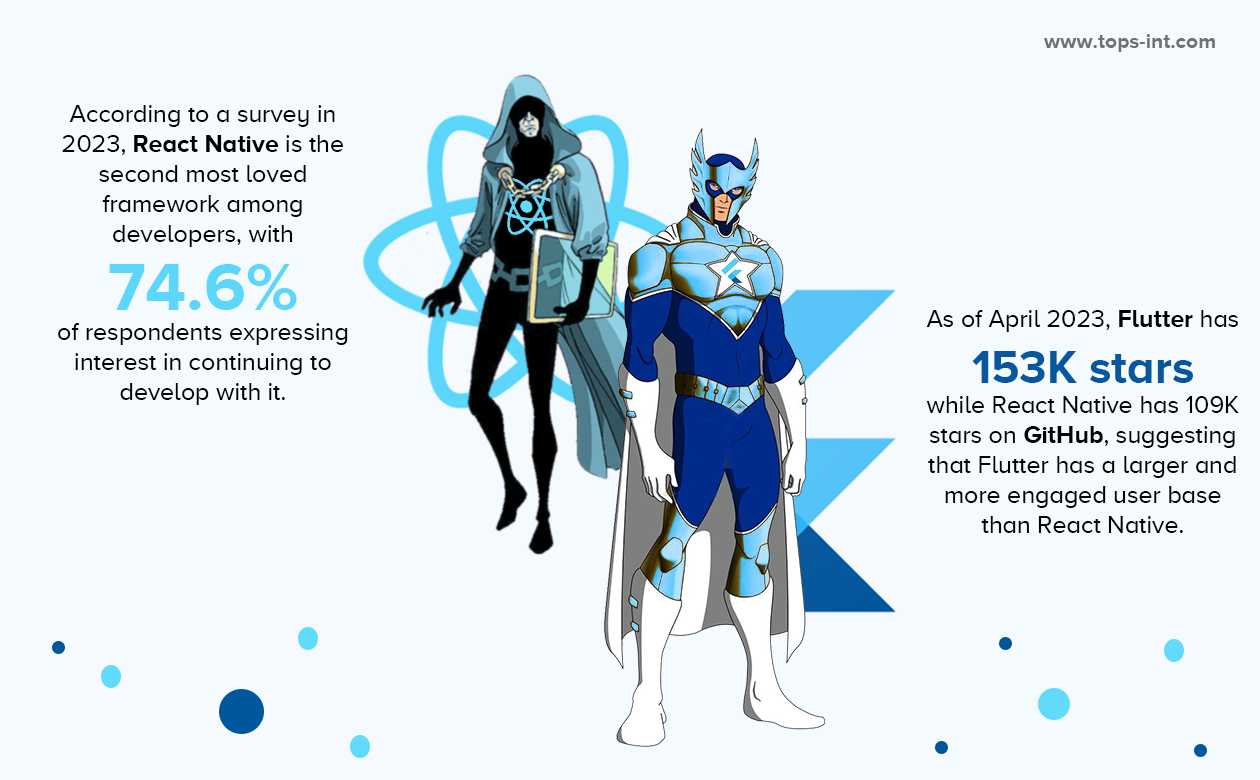
- Speed and Smoothness: React Native is no slouch, but it might get out of breath during high-performance tasks, as it uses JavaScript Bridge to communicate with native modules.
- Animations and Gestures: Although possible, achieving buttery smooth animations in React Native requires a steeper curve.
- Memory Usage: React Native apps tend to use more memory compared to Flutter.
Flutter
- Speed and Smoothness: Flutter is like a Cheetah on a sugar rush. It compiles to native code, which means, performance-wise, it’s a beast.
- Animations and Gestures: Flutter’s got your back with a plethora of rich, smooth animations. Gestures? Yeah, those too!
- Memory Usage: Flutter apps generally use less memory compared to React Native.
Development Speed and Productivity
Let’s talk about development speed and how our contenders fare.
React Native
- Pre-built Components: React Native offers basic components. For anything fancier, third-party libraries are your friends.
- Hot Reloading: React Native does support hot reload. It’s like having a “CTRL+Z” for your code.
- Debugging: It’s not all sunshine and rainbows, but the Chrome developer tools do a decent job.
- 2023 Improvements: The ongoing enhancements to the Hermes JavaScript engine are noteworthy.
Flutter
- Pre-built Components: Flutter is like a treasure chest of widgets. Need a customised slider? It’s probably in there.
- Hot Reloading: Flutter also supports hot reload. It’s snappy and efficient.
- Debugging: Flutter’s got a richer set of debugging tools compared to React Native.
Ecosystem and Community
React Native
- Libraries and Plugins: React Native’s been around longer, so there’s a larger selection of third-party libraries and plugins.
- Community: React Native boasts a larger community. This means more support, more libraries, and more tutorials.
- Notable Resources: The React Native GitHub is an excellent resource. There’s also an annual React Native conference.
Flutter
- Libraries and Plugins: Flutter’s catching up real fast. The Flutter community is contributing to a rapidly growing pool of libraries and plugins.
- Community: Flutter’s community, though newer, is vibrant and active.
- Notable Resources: The Flutter GitHub is invaluable. Don’t miss the Flutter Engage conference.
Platform Compatibility and Native Features
React Native
- iOS & Android: React Native initially aimed at iOS. Android support followed soon after it. These are solid.
- Web & Desktop: Though not out-of-the-box, with libraries like React Native for Web, it's achievable.
- Native Features: React Native can dip into native code. Need access to device features? You’re set with a blend of JavaScript and native modules.
Flutter
- iOS & Android: Flutter’s got both iOS and Android covered like a pro.
- Web & Desktop: Flutter's wings are spreading. Web support is in a stable release, and desktop is in the experimental phase.
- Native Features: Flutter allows you to create custom plugins in Dart, which communicate with native code.
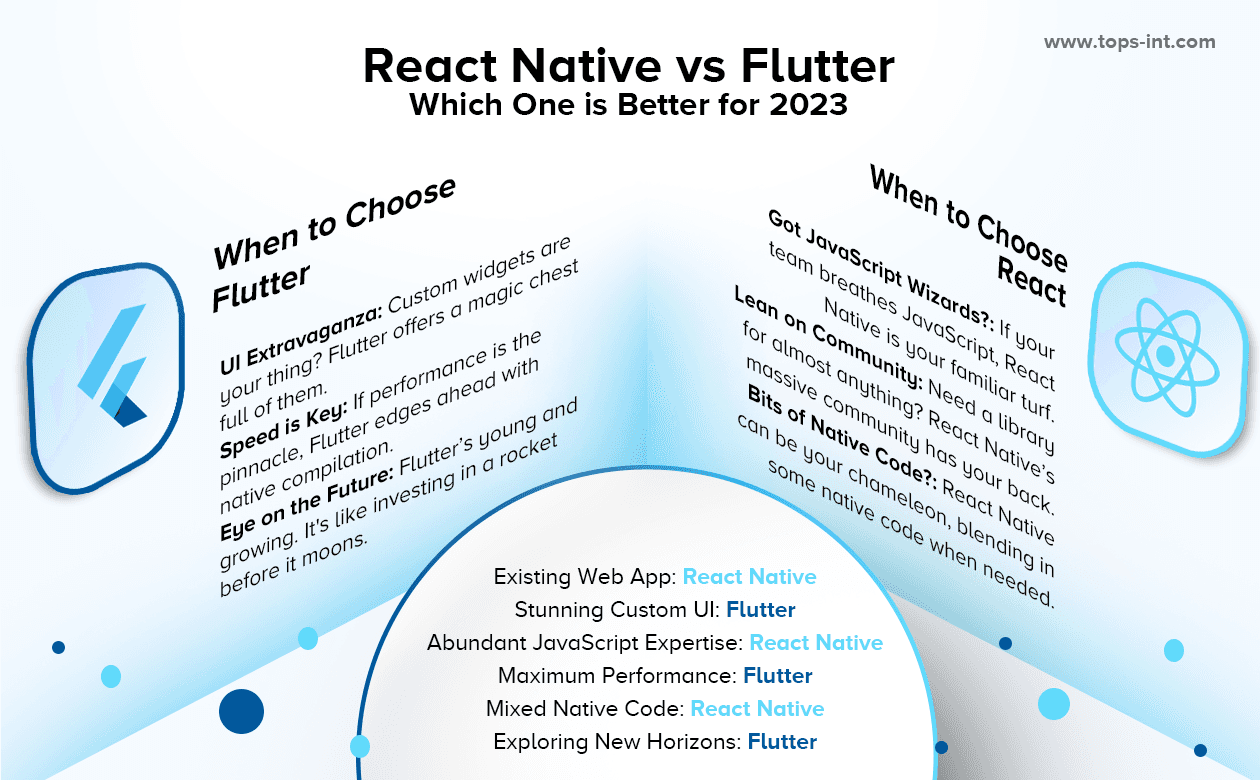
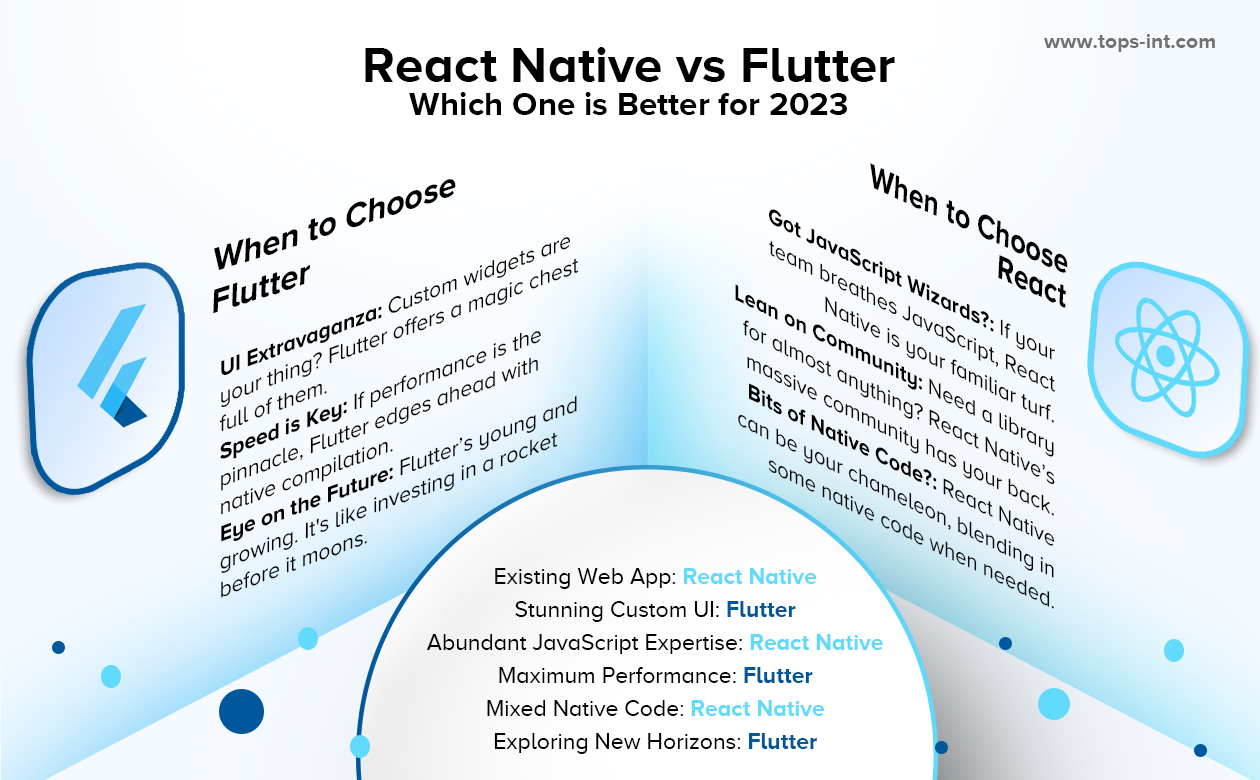
Choosing Your Knight: React Native or Flutter?
React Native: When should you choose it?
Flutter: When should you choose it?
Key Takeaways:
- For JavaScript buffs and rapid MVP development, React Native shines.
- For expressive UIs, performance-critical tasks, and integrated experience, Flutter steps into the spotlight.