Computer Coding for Kids in Ahmedabad
Coding Courses for Kids available online and offline in Ahmedabad


Certificate Partner(s): NSDC/Skill India

- Hands on Training
- Flexible Timings
- Industry Based Training
- Expert Trainer
- Affordable Fees
- Placement Opportunities
Attend a Free Demo
Fill the details and we will call you for further guidance

Our Facts and Figures
1 Lac+
Student Placed
3000+
Companies TieUp
19+
Offices in India
50+
Industry Courses
Get 100% Job Assistance by enrolling in Certified Computer Coding for Kids
Key Highlights
Limited Students Batch
Personalised Attention
Highly Qualified Teachers
Flexible Batch Timings
Interactive Learning
Live Projects
Career Support
Job Oriented Training
Kids Computer Course Highlights
Computer Coding for Kids in Ahmedabad — 100% Placement Assistance + Live Projects
Computer Coding for Kids in Ahmedabad at TOPS Technologies is a structured, age-appropriate program designed to build strong logical thinking and programming foundations in children. With interactive learning, live projects, and expert guidance, this course ensures skill development from an early age along with 100% Placement Assistance for long-term career pathways. Ahmedabad is rapidly adopting digital education—learn more on Wikipedia.
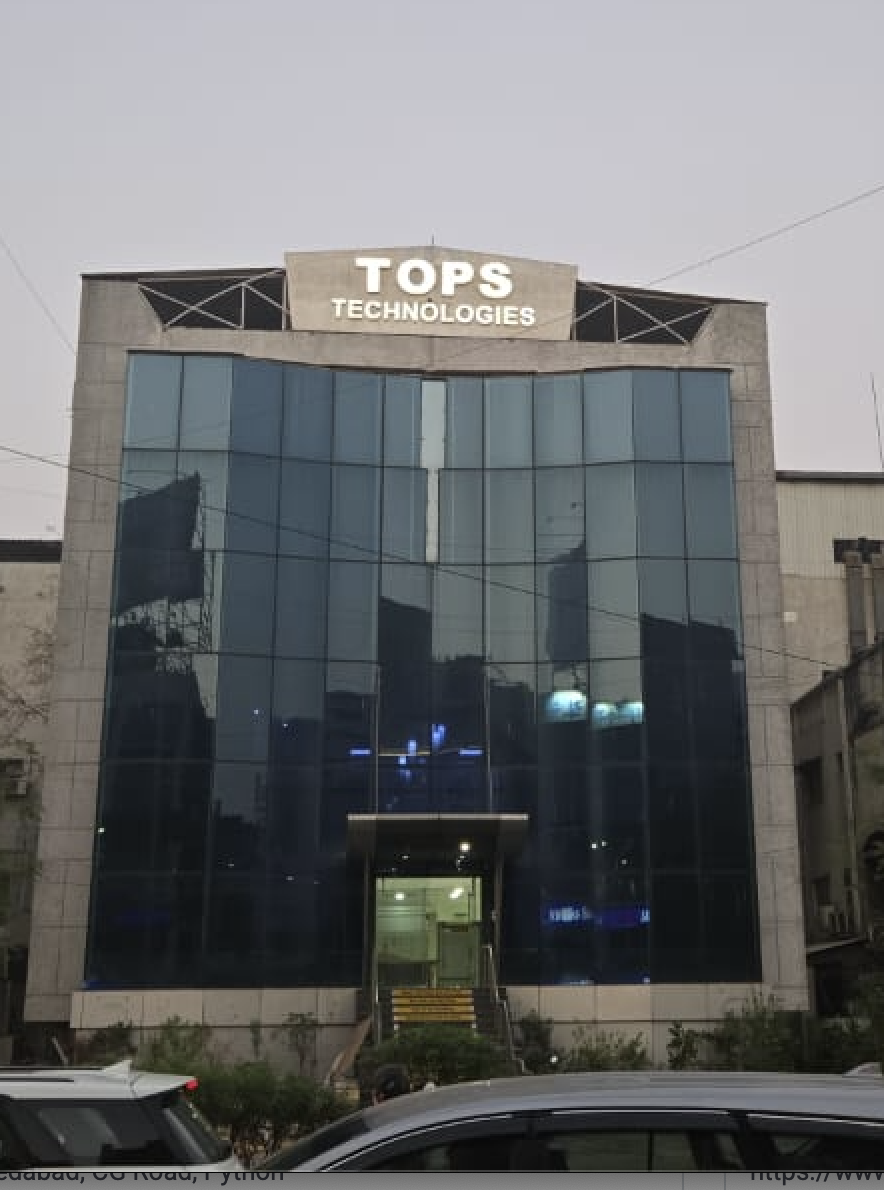
TOPS Technologies has 4 training centers in Ahmedabad — CG Road, SG Road, Nikol, and Maninagar — making access easy for students across the city.
Key Benefits of Computer Coding for Kids in Ahmedabad
- Child-focused curriculum with 100% Placement Assistance mindset for future readiness
- Live project training using visual and beginner-friendly coding tools
- Flexible batch options for school schedules and holidays
- Expert trainers experienced in teaching kids and beginners
- Certification support to build early tech credentials
- Career guidance and logical skill-building through mock challenges
Why Computer Coding for Kids in Ahmedabad?
Ahmedabad is becoming a hub for digital learning, STEM education, and technology-driven initiatives. Parents searching for coding classes near me or coding classes in Ahmedabad are increasingly prioritizing structured programs that nurture problem-solving skills early. Computer Coding for Kids in Ahmedabad helps children understand programming concepts through games, animations, and simple logic, preparing them for advanced learning in the future.
Job Opportunities & Future Scope in Ahmedabad
While this program is designed for kids, early exposure to coding opens long-term career opportunities in software development, AI, robotics, and data science. Ahmedabad’s growing IT ecosystem values strong foundational skills. Students who start early often progress faster into advanced programs, internships, and innovation-based careers. This Computer Coding for Kids in Ahmedabad course focuses on confidence-building, creativity, and structured learning supported by 100% Placement Assistance pathways in later stages.
Future Job Roles After Advanced Learning
- Software Developer
- Game Developer
- Web Developer
- App Developer
- AI & Machine Learning Engineer
- Robotics Programmer
- Data Analyst
- Technology Innovator
Who Can Enroll?
- School students interested in technology
- Kids aged 6–16 years
- Beginners with no prior coding knowledge
- Students seeking logical skill development
- Parents looking for structured computer classes for kids
What Kids Will Learn in This Training
- Beginner-level coding certification
- Real-world mini projects and games
- Exposure to block-based and basic text-based programming
- Problem-solving and logical thinking skills
- Participation in CareerFest-style learning events
- Confidence through presentations and guided challenges
Curriculum Overview
- Introduction to Coding: Understanding what coding is and how it works
- Logical Thinking: Puzzles and activities to build reasoning skills
- Block-Based Programming: Visual coding for easy learning
- Game & Animation Design: Create simple games and animations
- Basic Programming Concepts: Loops, conditions, and commands
- Mini Live Projects: Hands-on project development
Placement & Career Support
TOPS Technologies supports long-term career growth through structured learning paths and industry exposure. As students progress, they gain access to JobFest, CareerFest / Campus Drive, and the dedicated Placement Cell. This ensures a smooth transition from beginner coding to professional career tracks.
Additional career initiatives include JobFest, CareerFest / Campus Drive, and continuous mentoring from the Placement Cell.
Student & Parent Testimonials
- “We were searching for coding classes near me, and TOPS provided the perfect learning environment for my child.”
- “Among all options for coding classes for kids near me, TOPS Technologies stood out with its structured approach.”
- “The trainers made learning fun in these computer classes for kids.”
- “One of the best coding classes in ahmedabad for children with practical exposure.”
Local Centers — Train at the nearest TOPS Technologies centre
TOPS Technologies CG Road
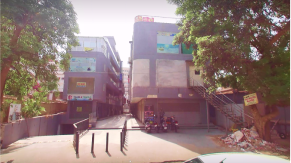
Address: TOPS House, 2, Chimanlal Girdharlal Rd, Shanti Sadan Society, Ellisbridge, Ahmedabad, Gujarat 380006
Phone: +919974755006
TOPS Technologies SG Road
Address: 102, Baleshwar Square, Iskcon Cross Rd, Sarkhej - Gandhinagar Hwy, opposite Iskcon Mandir, Ahmedabad, Gujarat 380015
Phone: +919904422211
TOPS Technologies Maninagar
Address: 401, Amruta Arcade, Maninagar Char Rasta, Lala Lajpat Rai Marg, Maninagar, Ahmedabad, Gujarat 380008
Phone: +919974863333
TOPS Technologies Nikol
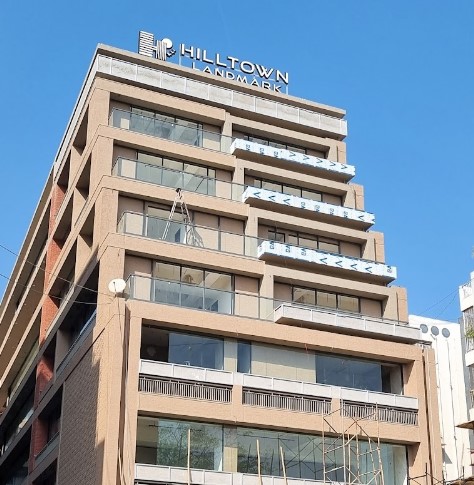
Address: 401, TOPS Technologies, Hilltown Landmark, Nikol Canal Rd, Opp. Das Khaman, Nikol, Ahmedabad, Gujarat 380049
Phone: +917624007666
Why Parents Choose This Course in Ahmedabad
Parents in Ahmedabad prefer practical, future-focused learning programs. Computer Coding for Kids in Ahmedabad stands out due to its interactive teaching methods, experienced trainers, and structured learning path supported by TOPS Technologies.
Start Your Child’s Coding Journey Today
Give your child a strong foundation with Computer Coding for Kids in Ahmedabad. This program combines fun learning, technical skills, and long-term career support with 100% Placement Assistance.
Advanced Course Insights
Early exposure to coding helps children develop analytical thinking, creativity, and confidence. Globally, coding is considered a core skill alongside math and science. In India, the demand for skilled technology professionals continues to rise, making early learning a strategic advantage. Computer Coding for Kids in Ahmedabad prepares students for advanced programming, robotics, and AI courses in the future. TOPS Technologies enhances this journey through expert mentorship, live projects, structured progression, and a long-term vision of 100% Placement Assistance, ensuring learners are career-ready when the time comes.
40%
Average Salary Hike
4.5 Lacs
Highest Salary
3000+
Hiring Partners
Join Our Free Upcoming Webinar

PHP with AI – Build Smart Web Applications
16 May 2026, 11:00 AM
Trainer
Brijesh Pandey
(Sr. Technical Trainer)
Digital Marketing with AI
16 May 2026, 12:30 PM
Trainer
Sanket Chauhan
(Sr. Technical Trainer)
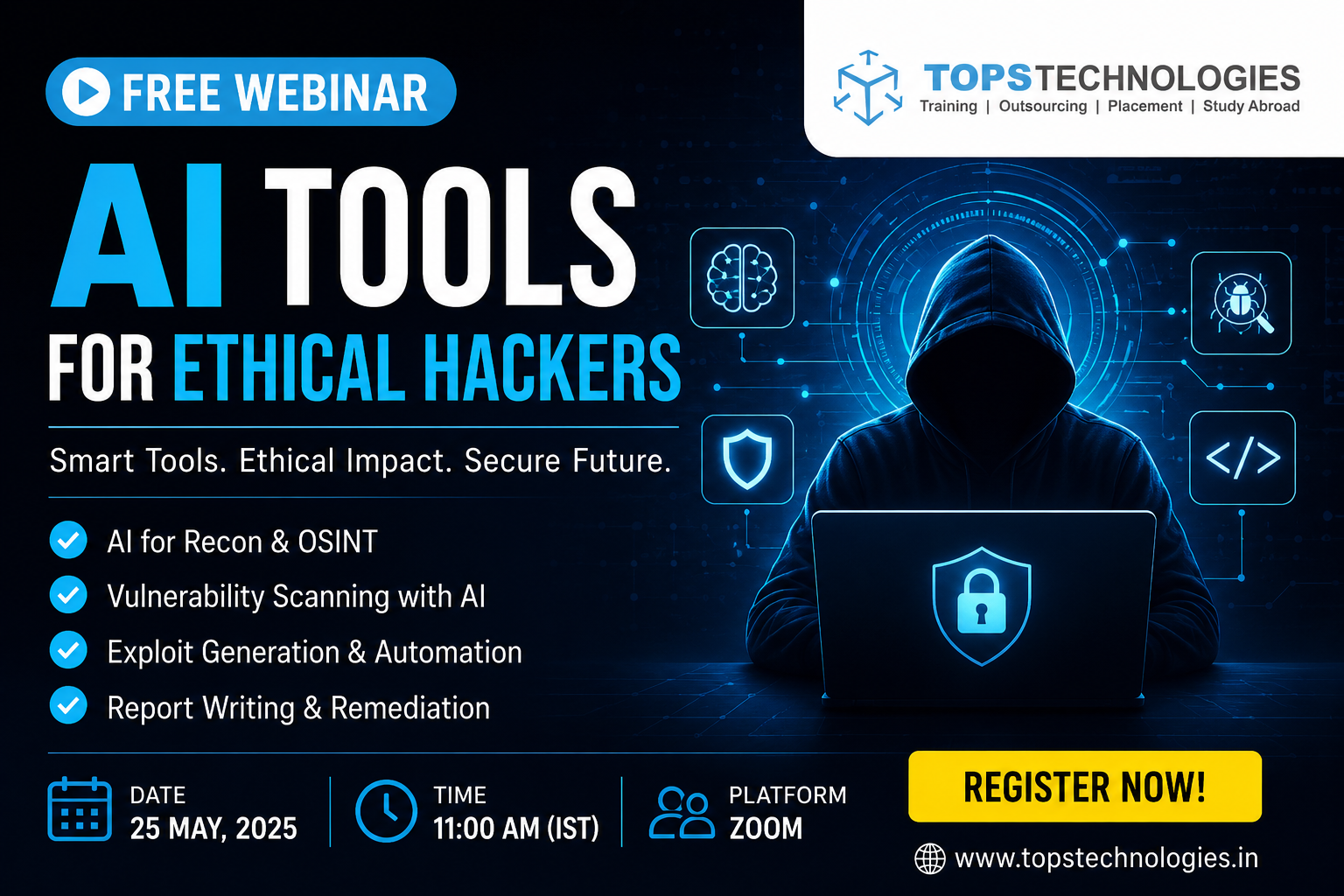
AI Tools for Ethical Hackers
16 May 2026, 03:00 PM
Trainer
Faruk Pathan
(Sr. Technical Trainer)
Kids Computer Course Curriculum
Download Curriculum- Basic Projects: - Make Shape, flying story
- Make Story
- Birthday Card
- 3D Infiniity/Name - Pen Extension
- Dancing Party - Goal
- Intermediate Projects:Maze Game
- Chat Bot
- Hit the sprite - video sensing ext
- Death Race
- Dodge Ball
- Dodge Ball L-2
- Platform Starter
- Platform Starter L-2
- Catch Balloons - video sensing ext
- Shark vs Scuba Man
- Shark vs Scuba Man L-2
- Shooting Defense
- space war
- Shooting Defense L-2
- Flappy Bird
- A Rainbow pin wheel - Pen Extension
- Flappy Bird L-2
- Cat and Mice
- Cat and Mice L-2
- Paddle and Brick
- Story with Text to Speech - ML
- Basketball - Video sensing Ext
- Paddle and Brick L-2
- Advance Projects: - Toxic Chemical
- Toxic Chemical L-2
- Astro Cat
- Spirograph pattern - Pen Extension
- Astro Cat L-2
- Quiz
- 3D Shark - My Blocks , Pen Ext
- Quiz L-2
- Make a Melody
- Make a Melody L-2
- Hurdle Race
- Hurdle Race L-2
- Hurdle Race L-3
- Tic Tac Toe
- Memory Game
- Memory Game L-2
- Ludo
- Mario
- Video Sensing Projects: Hit the sprite with sensing, Piano
- Selfie with camera, catch the stars, Drum playing
Attend a Free Demo
Fill the details and we will call you for further guidance
Our TOPS Training Centers in India



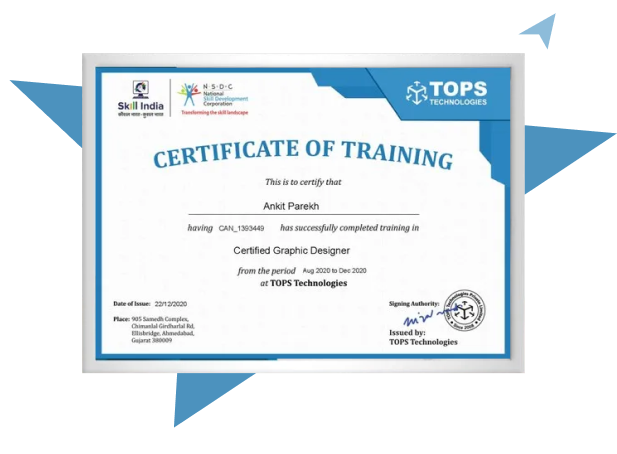
Get Training Certificate by Government
Recognized NSDC/Skill India
- National Skill Development Corporation
- Supported by the vision of PM Shri Narendra Modi
- Certification by NSDC SkillIndia
- Valid for all Jobs and College Training
- International Recognition
Student Reviews
Arvind Mathur
ParentsOverall, the computer course for kids has been a very positive experience. It helped my child develop basic co...
Read MoreDeepa Mathur
ParentsAs a parent, I appreciate how calmly and clearly everything is taught. The course focuses on building confiden...
Read MoreSuresh Pillai
parentsThis computer course is perfect for introducing children to technology. The lessons are simple, and kids are e...
Read MoreAnitha Pillai
ParentsI am satisfied with the progress my child has made through the computer course at TOPS Technologies Ahmedabad....
Read MoreBalaji Srinivasan
ParentsThe kids’ computer course at TOPS Technologies Ahmedabad balances learning and fun very well. The teaching sty...
Read MoreKavya Srinivasan
ParentsWhat I liked most about TOPS Technologies Ahmedabad is the patience of the trainers. They make sure children u...
Read MoreRamesh Naik
ParentsI noticed a positive change in my child after joining the computer course at TOPS Technologies Ahmedabad. Basi...
Read MoreLata Naik
ParentsThe computer course for kids at TOPS Technologies Ahmedabad is well designed for young learners. Classes are i...
Read MoreVinod Salunkhe
ParentsAs a parent, I wanted my child to learn computers in a safe and structured way. The kids’ computer course at T...
Read MoreAarti Salunkhe
ParentsI enrolled my child in the computer course for kids at TOPS Technologies Ahmedabad, and I’m really happy with...
Read MoreFAQ
If your child enjoys games, puzzles, logic-based apps, or shows curiosity about how technology works, they’re likely to enjoy coding. A free trial class can also help determine interest.
The course uses kid-friendly platforms like Scratch, Code.org, Tynker, Minecraft Education, and Replit for Python or JavaScript, depending on the level.
A laptop or desktop computer, a stable internet connection, and a basic web browser are typically sufficient. Headphones and a microphone are recommended for live classes.
Yes, our learning platforms are child-safe, ad-free, and monitored by instructors. Kids are not exposed to unsafe or inappropriate content.
Absolutely. Parents receive regular updates, progress reports, and project showcases to track how well their child is doing.
Yes, most live classes are recorded and shared with students for revision purposes, in case they miss a session or want to review a concept.
Courses are led by experienced instructors with backgrounds in computer science, education, and child psychology. Many are certified coding educators.
School computer classes are often limited to basic software use. This course focuses on actual programming, logical thinking, and building real tech projects from scratch.
Children are assessed through quizzes, assignments, projects, and code reviews. Regular feedback ensures improvement in both understanding and creativity.
Both have advantages. Group sessions foster collaboration and peer learning, while one-on-one offers personalized attention. We offer both formats.
Interview Questions
For younger kids, I’m more animated, using visuals, games, and storytelling. I move at a slower pace with lots of reinforcement. Teenagers appreciate real-world connections and autonomy, so I guide rather than instruct, allowing them space to explore, make mistakes, and innovate.
Clear rules from day one help. I keep lessons dynamic, involve everyone through questions, and use features like polls or screen sharing. If a student is distracted, I gently call their name or give them a leadership task to bring them back in. Variety in activities also keeps focus high.
I integrate games, drag-and-drop exercises, and live problem-solving where students suggest steps and I code it live. I also let them share their screens to present projects or fix errors. This level of interaction builds ownership and makes learning exciting.
I plan core tasks for all, with extra challenges for faster students. Those who finish early can assist peers or take on a bonus task. I also rotate who I check in with more frequently and use breakout rooms if possible for focused support.
One student couldn’t grasp conditionals and felt frustrated. I paused their project and related it to choosing clothes: "If it's raining, wear a raincoat." We built a weather app together, and that real-world link helped him understand. After that, he became confident and even helped others.
I use private chat, drawing tools, or reaction emojis to interact with them. I also give them small, safe opportunities to participate, like clicking buttons or writing code snippets. Over time, these children gain confidence and start opening up more.
I avoid heavy terminology and instead use everyday language. For example, instead of saying "initialize a variable," I might say, "Let’s name this box and put something in it." Using stories and real-life examples keeps the content relatable.
If a child suddenly stops responding, gets quiet, or makes repeated mistakes, I take it as a sign. I may switch gears to a lighter activity, check in with them privately, or change the pace. It’s important to validate their feelings and re-ignite their interest.
I start by showing them what they’ve done right, however small. I offer them simple tasks they can complete easily to rebuild their self-belief. I remind them that everyone struggles and that coding is like solving a puzzle—it takes time and patience.
Children make mistakes, repeat questions, and sometimes need multiple explanations. Coding can be abstract, so they need time to absorb it. Patience helps build a trusting environment where children feel safe to explore, fail, and learn.