VFX Course
Enroll in the Best VFX Training Institute for Comprehensive VFX Course & Classes. Learn Video Editing, After Effects & More with Certificate & Job Placement!


Certificate Partner(s): NSDC/Skill India

- Hands on Training
- Flexible Timings
- Industry Based Training
- Expert Trainer
- Affordable Fees
- Placement Opportunities
Attend a Free Demo
Fill the details and we will call you for further guidance

Our Facts and Figures
1 Lac+
Student Placed
3000+
Companies TieUp
19+
Offices in India
50+
Industry Courses
Get 100% Job Assistance by enrolling in Certified VFX Training Course
Key Highlights
Limited Students Batch
Personalised Attention
Highly Qualified Teachers
Flexible Batch Timings
Interactive Learning
Live Projects
Career Support
Job Oriented Training
Course Highlights
VFX Training Course in Ahmedabad, Surat, Rajkot, Vadodara & Gandhinagar
Master Visual Effects with AI-Powered VFX Tools & 100% Placement Support
Bring your imagination to life with our VFX Training Course at TOPS Technologies. Offered across our Ahmedabad, Surat, Rajkot, Vadodara, Gandhinagar, and Nagpur centers, this program is designed for students and professionals who want to build a career in visual effects, animation, gaming, and digital media.
Our industry-mapped curriculum combines practical learning with AI-powered VFX tools to prepare you for jobs in films, advertising, OTT platforms, gaming, and design studios.
- 100% Job-Oriented Training
- Hands-on Projects & Showreels
- Placement Support with Top Companies
- Learn with Latest AI & VFX Software
Why Learn VFX?
- The global VFX industry is growing rapidly, driven by Hollywood, Bollywood, OTT platforms, gaming, and advertising agencies.
- AI-powered VFX tools are transforming how films, ads, and games are made, creating huge career opportunities.
- Skilled VFX artists earn competitive salaries and work on exciting projects worldwide.
If you’re a school/college student looking to start your career or a professional wanting to upgrade, VFX is one of the most rewarding career choices today.
What You’ll Learn in the VFX Course
At TOPS Technologies, we ensure our VFX training is practical and industry-relevant. You’ll learn:
- Fundamentals of VFX, CGI & Compositing
- Green Screen Editing & Rotoscopin
- 3D Integration with Live Action
- Particle Effects, Lighting & Rendering
- Motion Graphics & Title Animation
- AI-Powered VFX Software for faster workflows
- Tools like Adobe After Effects, Blender, Houdini, Maya, Nuke
Who Can Join This Course?
Our VFX course is ideal for:
- Students (10th, 12th, Graduates) who want to build a career in design & media
- College Students in BCA, B.Sc. IT, or Design-related fields
- Professionals upgrading with AI & VFX skills
- YouTubers & Content Creators who want to add pro-level effects
Why Choose TOPS Technologies for VFX and Animation Course?
At TOPS Technologies, we go beyond theory with 100% practical-based training and career-focused learning.
- Industry-Mapped Curriculum aligned with latest VFX tools & AI
- Live Projects & Portfolio Development for real-world exposure
- 100% Placement Assistance with top studios & IT companies
- Training Centers Near You – Ahmedabad, Surat, Rajkot, Vadodara, Gandhinagar & Nagpur
- Flexible Learning Options – Classroom & Online
Career Opportunities After VFX Course
After completing the VFX course, you can work in:
- Film & OTT Platforms (Netflix, Prime Video, Bollywood, Hollywood)
- Advertising Agencies & Design Studios
- Gaming Industry (3D & AR/VR development)
- Digital Marketing & Content Creation
Job Roles You Can Apply For:
- VFX Artist
- Motion Graphics Designe
- 3D Compositor
- Video Post-Production Specialist
- CGI & Special Effects Designer
VFX Training Locations at TOPS Technologies
We provide VFX Training at TOPS centers across Gujarat & Maharashtra, including:
- VFX Course in Ahmedabad
- VFX Training in Surat
- VFX Classes in Rajkot
- VFX Institute in Vadodara
- VFX Training in Gandhinagar
- VFX Course in Nagpur
Frequently Asked Questions (FAQs)
Q1. What is the duration of the VFX course at TOPS?
The course duration ranges from 3 to 6 months depending on the learning mode (regular or fast-track).Q2. Do you provide job placement after the course?
Yes. We offer 100% placement support with studios, IT companies, and media firms across India.Q3. What tools will I learn in the VFX course?
You’ll learn Adobe After Effects, Blender, Houdini, Nuke, and AI-powered VFX tools.Q4. Can school or college students join this course?
Absolutely! Students from 10th, 12th, or college backgrounds can join and start building their careers early.Q5. Is VFX a good career in India?
Yes, the VFX industry in India is booming due to OTT platforms, films, and gaming. Skilled VFX professionals are in high demand with excellent salary growth.Q6. Do you provide online training?
Yes. We offer both classroom and online VFX courses for flexible learning.
40%
Average Salary Hike
4.5 Lacs
Highest Salary
3000+
Hiring Partners
Join Our Free Upcoming Webinar
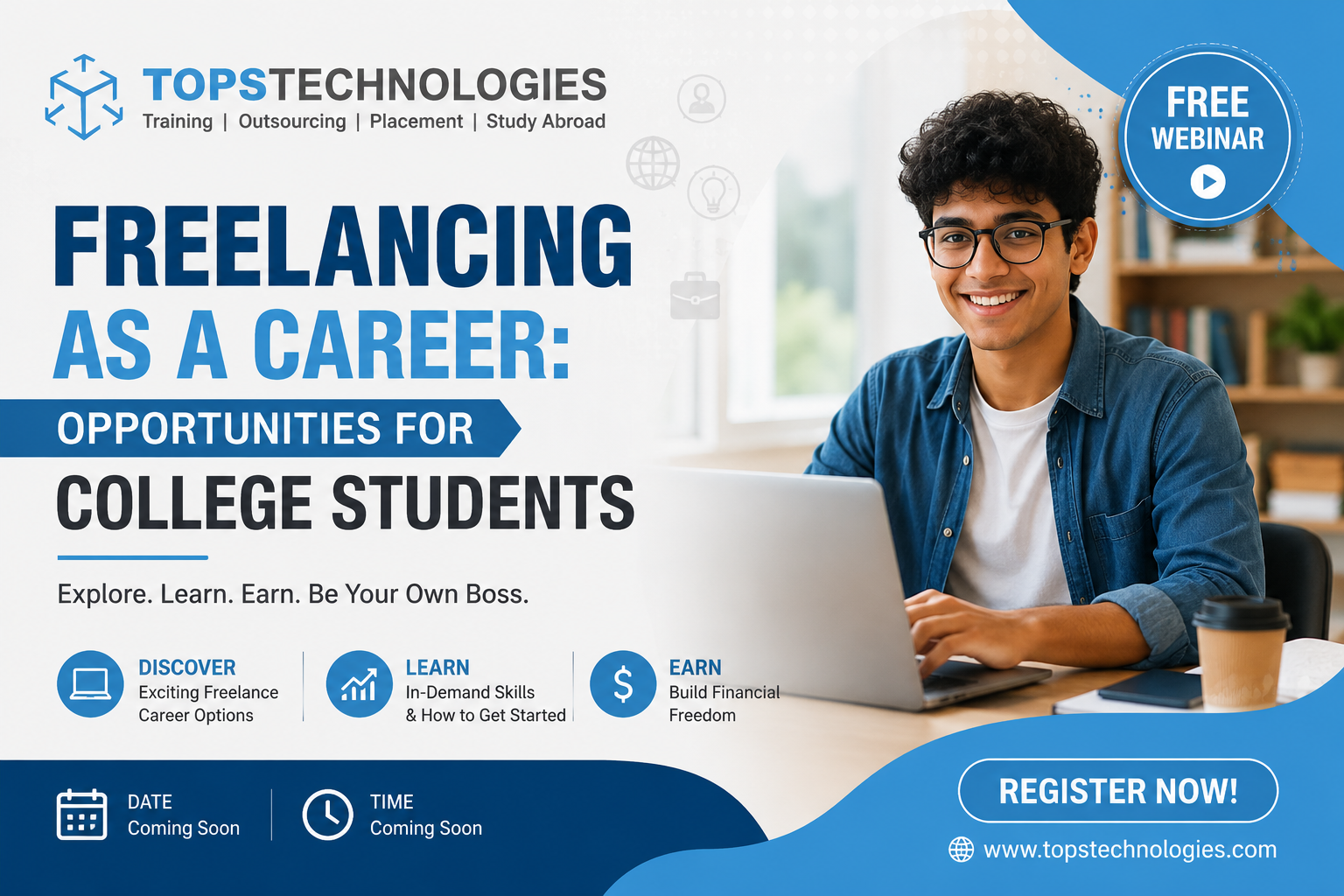
Freelancing as a Career: Opportunities For College Students
23 May 2026, 11:00 AM
Trainer
Anjali Patel
(Sr. Technical Trainer)


AI for Designers: Create More, Stress Less
23 May 2026, 02:30 PM
Trainer
Parth Patel
(Sr. Technical Trainer)
Course Curriculum
Download Curriculum- What is Visual Effects (VFX)?
- Evolution of VFX in films, gaming & OTT platforms
- Role of AI in modern VFX workflows
- Understanding VFX pipeline: Pre-production, Production & Post-production
- Career opportunities in India & globally
- Introduction to design principles for VFX
- Basics of graphic design & image editing (Photoshop/Illustrator)
- Video editing essentials with Adobe Premiere Pro
- Understanding formats, codecs, and resolution
- Introduction to compositing concepts
- Green screen (chroma keying) techniques
- Rotoscoping & matte creation
- Color correction & grading for VFX shots
- Tracking & match-moving
- Basics of motion graphics design
- Creating animated text, titles & lower thirds
- Kinetic typography for ads & films
- AI-powered motion graphics tools
- Introduction to 3D modeling & rendering
- Integrating 3D elements with live action
- Camera tracking & depth of field
- Lighting & shadow matching for realism
- Tools: Blender, Maya, Cinema 4D
- Particle effects (smoke, fire, rain, explosions)
- Dynamics & simulations (cloth, fluids, hair, destruction)
- Creating realistic environments & backgrounds
- Digital matte painting & set extension
- Using AI to generate textures & assets
- Introduction to AI-assisted VFX workflows
- Generative AI for CGI asset creation
- AI-based rotoscoping, cleanup & object removal
- Machine learning in motion tracking
- Using Runway ML, Adobe Firefly & Stable Diffusion for VFX
Attend a Free Demo
Fill the details and we will call you for further guidance
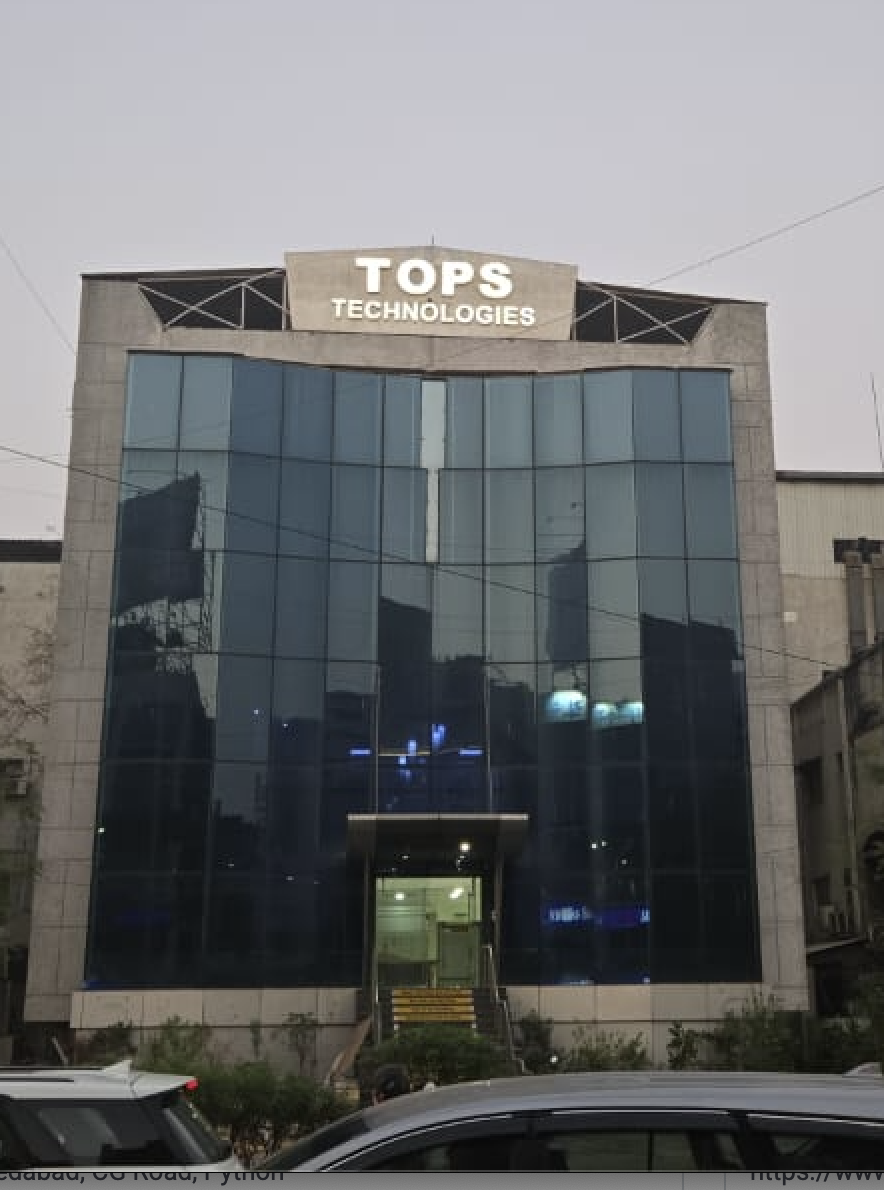
Our TOPS Training Centers in India







Course Key Features
- AI-Powered VFX Training – Learn with the latest AI-driven tools for faster workflows.
- 100% Placement Assistance – Dedicated career support with top studios & IT companies.
- Hands-on Practical Learning – Work on live projects, create showreels & build a strong portfolio.
- Industry-Mapped Curriculum – Designed to match the latest film, gaming & digital media standards.
- Expert Mentorship – Learn from industry professionals with real-world project experience.
- Flexible Learning Options – Classroom & online training available across multiple locations.
- Cutting-Edge Software Training – Master tools like Adobe After Effects, Blender, Houdini, Nuke & Maya.
- Career-Oriented Approach – Build skills for jobs in films, OTT, advertising, gaming & design studios.

Skills Covered
- Fundamentals of VFX, CGI & Compositing
- Green Screen Editing & Rotoscoping
- 3D Integration with Live Action Footage
- Particle Effects, Lighting & Rendering
- Motion Graphics & Title Animation
- Video Post-Production & Editing Techniques
- AI-Powered VFX Tools for faster production
- Working with Adobe After Effects, Blender, Houdini, Maya & Nuke
- Creating Showreels & Portfolios for career opportunities

Job Roles
- VFX Artist
- Motion Graphics Designer
- 3D Compositor
- Video Post-Production Specialist
- CGI & Special Effects Designer
- Animation & Multimedia Artist
- AR/VR Effects Creator
- Film & OTT Visual Effects Specialist
- Gaming VFX Designer
- Digital Content Creator (with VFX expertise)

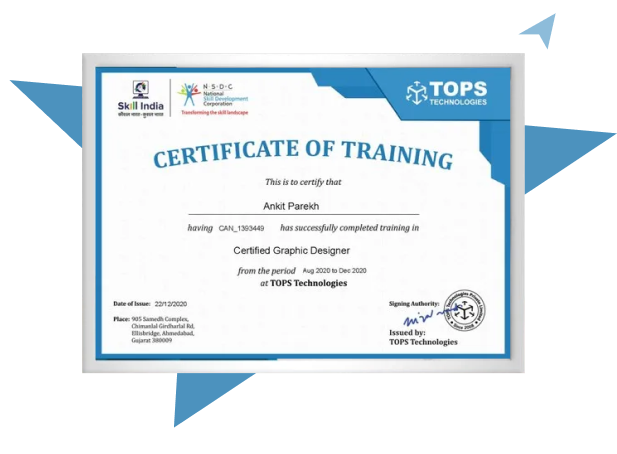
Get Training Certificate by Government
Recognized NSDC/Skill India
- National Skill Development Corporation
- Supported by the vision of PM Shri Narendra Modi
- Certification by NSDC SkillIndia
- Valid for all Jobs and College Training
- International Recognition
Student Reviews
Talha Mirza
VFX ArtistOverall, the VFX course at TOPS Technologies Surat helped me gain confidence and clarity. It gave me a realist...
Read MoreShahbaz Ansari
VFX ArtistThis course helped me become more patient and detail oriented. Watching my work improve frame by frame was ver...
Read MoreSameer Inamdar
VFX ArtistThe VFX sessions at TOPS Technologies Surat helped me understand how creativity and technical skills work toge...
Read MoreDanish Parvez
VFX ArtistSurat mein TOPS Technologies Surat ka VFX course kaafi eye-opening raha. Pehle lagta tha VFX sirf software ka...
Read MoreNaveed Akhtar
VFX ArtistOne thing that stood out was the attention given to detailing. Small changes in lighting and masking made a bi...
Read MoreTushant Dumbre
VFX ArtistLearning VFX at TOPS Technologies Surat felt practical and realistic. Real examples from films and advertiseme...
Read MorePiyush Barot
VFX ArtistThe trainer explained not just how to use tools, but why certain techniques are used. That understanding helpe...
Read MoreRoshan Bawaskar
VFX ArtistBefore this course, VFX felt overwhelming. Learning the workflow step by step helped break down complex effect...
Read MoreSuraj Khatik
VFX ArtistWhat I appreciated about learning at TOPS Technologies Surat was the focus on fundamentals like compositing an...
Read MoreLalit Mewada
VFX ArtistThe VFX course at TOPS Technologies Surat helped me understand how visual effects are actually created behind...
Read MoreMohan Devgan
VFX ArtistVFX course karne ke baad movies aur ads dekhne ka nazariya hi change ho gaya. Green screen, compositing aur ef...
Read MoreSrinivas Murthy
VFX ArtistOverall, the VFX Course in Ahmedabad at TOPS Technologies was a valuable learning experience. The balance of t...
Read MorePadma Reddy
VFX ArtistThe projects included in the course helped me build a basic VFX portfolio, which is useful for future opportun...
Read MoreRamesh Naidu
VFX ArtistI found the learning environment at TOPS Technologies very supportive. Feedback on assignments helped me impro...
Read MoreAishwarya Patil
VFX ArtistHands on training with industry standard tools made this course very effective. The practical sessions helped...
Read MoreAnil Pawar
VFX ArtistThe VFX course helped me understand the complete post production workflow, from raw footage to final output. T...
Read MoreNiyati Mehta
VFX ArtistVFX course ka best part hands on practice tha. Software tools par kaafi work karwaya gaya, jisse mujhe composi...
Read MoreTushar Modi
VFX ArtistThe trainer was experienced and always ready to clear doubts. Their guidance helped me improve my technical sk...
Read MoreSharmila Parmar
VFX ArtistThe course curriculum was well organized and beginner friendly. Each module was supported with hands on assign...
Read MoreDinesh Chauhan
VFX ArtistWhat I liked most about this course was the practical approach. Working on real footage helped me understand h...
Read MoreInterview Questions
VFX has a bright future across multiple industries. In films, it continues to push the boundaries of realism and fantasy. In gaming, real-time rendering engines like Unreal Engine are revolutionizing how players experience immersive worlds. Advertising is increasingly using VFX for interactive and engaging campaigns. With emerging technologies like AI, VR, and AR, VFX will become even more dynamic, cost-effective, and accessible in the coming years.
A strong example could be integrating a CGI object into footage with inconsistent lighting. The challenge might include mismatched shadows or reflections.The solution involves adjusting the lighting setup in 3D software, refining materials to match real-world surfaces, and using advanced compositing techniques. This type of question tests problem-solving skills, technical knowledge, and creativity under pressure.
Rendering transforms digital models, textures, and lighting into the final images or animations. It is one of the most time-consuming stages in VFX, as it requires high computing power to achieve realism. Optimization can be done by reducing unnecessary details, using efficient lighting, working with render layers, or leveraging GPU rendering and render farms. Balancing render speed with high-quality output is crucial for meeting production deadlines.
VFX (Visual Effects) is the process of creating or manipulating imagery outside of live-action filming. It allows filmmakers and media creators to design visuals that are too expensive, dangerous, or impossible to shoot in real life. From creating fantasy worlds and superheroes to adding subtle background effects, VFX enhances storytelling and provides audiences with immersive experiences that traditional filming alone cannot achieve.
CGI (Computer-Generated Imagery) focuses on creating digital 3D models, environments, and characters. Motion Graphics involves animated graphic design elements like logos, titles, and abstract visuals, often used in advertising and presentations. Compositing is the process of combining multiple elements — live-action footage, CGI, and backgrounds — into a single seamless image. While they all belong to VFX, each plays a different role in achieving the final output.
The VFX pipeline generally includes pre-visualization, modeling, texturing, rigging, animation, lighting, rendering, and compositing. Pre-visualization sets the creative direction, modeling builds digital objects, and texturing adds surface details. Rigging prepares models for animation, while lighting and rendering bring them to life with realism. Finally, compositing integrates all these elements with live footage, ensuring the final product looks cohesive and polished.
Green screen work involves filming subjects against a colored background (usually green or blue) and replacing that background with another image or video. The process requires careful keying and blending to ensure realism. Common challenges include uneven lighting, shadows, or color spill that affects the subject’s edges. To solve this, VFX artists use techniques like matte refinement, color correction, and edge blending to achieve smooth integration.
Popular industry tools include Adobe After Effects for motion graphics and compositing, Autodesk Maya and Blender for 3D modeling and animation, Nuke for advanced compositing, and Houdini for simulations like fire, smoke, and water. Each tool has specific strengths, and being skilled in multiple software platforms allows a VFX artist to handle a wide range of tasks. For example, After Effects is excellent for post-production work, while Maya and Blender are best for 3D creation.
Realism in VFX comes from attention to detail. Matching lighting, perspective, shadows, and motion between CGI and live-action footage is essential. For example, a CGI character must cast shadows and reflect light like real objects in the scene. Understanding natural physics, camera behavior, and color grading helps make digital elements blend seamlessly. The goal is to make viewers forget that the effect is artificial.
2D tracking captures motion on a flat plane, often used for stabilizing footage or adding simple text and graphics to moving objects. 3D tracking, also called match-moving, recreates the camera’s movement in a 3D environment. This allows digital objects to be placed within live-action footage with correct perspective and depth. While 2D tracking is faster and used for simpler effects, 3D tracking is essential for integrating CGI into complex shots.