Reports forecast a need for over 200,000 data science professionals in the country by next year.
Data science skills are not just 'nice-to-have' but necessary for businesses in various sectors - healthcare, retail, fintech, or e-commerce.
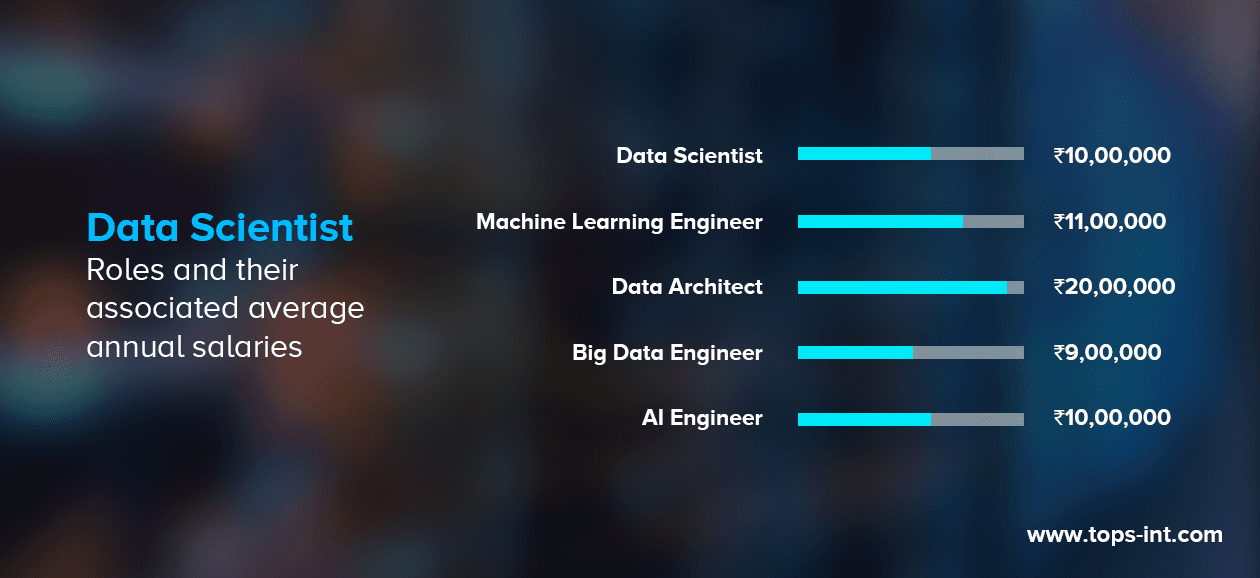
The return on career opportunities is substantial after investing time and effort in a Data Science Course. Here are the common roles and their associated average annual salaries:
How to learn Data Science? Learning data science can be a challenging yet rewarding journey. It starts with a basic understanding of mathematics and statistics, then dives deeper into programming languages like Python and R. Along the way, one picks up skills in machine learning, data visualization, and more.
Step-By-Step Guide To Become A Data Scientist
Month 1-2: Diving into Python for Data Science
Step 1: Understand Python Basics
- Start from the ground up. Learn Python's syntax, keywords, data types, functions, and control flow.
- The Official Python Documentation can serve as your starting point.
Step 2: Importance of Python Libraries in Data Science
- NumPy: Numerical Python or NumPy supports numerical operations, including handling arrays. NumPy User Guide
- Pandas: This is your go-to library for data manipulation and analysis. It's excellent for working with large data sets. Pandas Documentation
- Matplotlib: Visualisation is key in data science, and Matplotlib is excellent for creating static, animated, and interactive visualisations in Python. Matplotlib User Guide
Step 3: Learning Resources
- "Learn Python the Hard Way" by Zed Shaw and "Python Crash Course" by Eric Matthes are great resources for building a strong Python foundation.
- Python Certification Course provided by TOPS Technologies offer comprehensive interactive tutorials.
These steps should set you on the right track in your Python for Data Science journey! Remember, practice makes perfect. Consistently apply your skills through mini-projects or coding challenges.
Month 3-4: Mastering the Art of Statistics
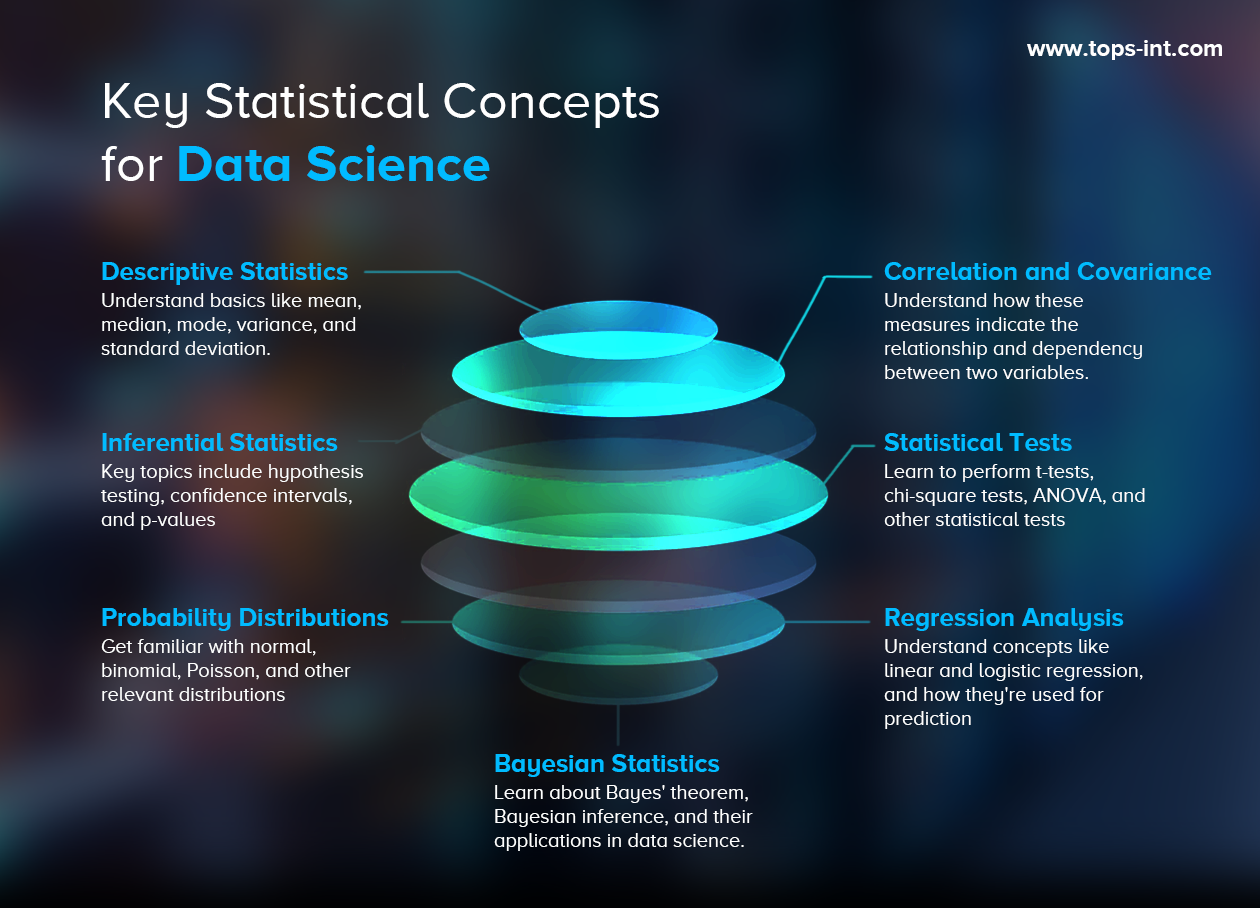
Step 1: Introduction to Statistics
- Start by understanding the basics: mean, median, mode, standard deviation, and probability distributions.
- Familiarise yourself with statistical tests and hypothesis testing.
Step 2: Recommended Resources for Learning Statistics
- The Official Statistics Documentation in Python can be an excellent starting point.
- "The Elements of Statistical Learning" by Trevor Hastie, Robert Tibshirani, and Jerome Friedman is a comprehensive book covering various statistics concepts.
- "Think Stats: Probability and Statistics for Programmers" by Allen B. Downey is a more practical, hands-on approach to learning statistics.
Month 5-6: Advanced Machine Learning and Introduction to Deep Learning
Step 1: Understand Ensemble Methods and Support Vector Machines (SVM)
- Ensemble methods, such as Random Forests and Gradient Boosting, combine multiple models to improve predictions. Dive into how these methods work and when to use them.
- SVM is a powerful technique used for both classification and regression. It's essential to grasp the idea behind SVMs, such as the kernel trick and support vectors.
Step 2: Introduction to Neural Networks
- Start with the basics of artificial neural networks. Understand how neurons are connected, how they process input, and how networks learn through backpropagation.
Step 3: Basics of Convolutional Neural Networks (CNN) and Recurrent Neural Networks (RNN)
- CNNs are used primarily for image processing tasks, while RNNs excel at processing sequential data, such as time series or natural language.
Recommended Resources
- The book "Hands-On Machine Learning with Scikit-Learn, Keras, and TensorFlow" by Aurélien Géron is a must-read for these topics.
- For a deep understanding of neural networks, Michael Nielsen's Neural Networks and Deep Learning is an accessible and free online book.
- You can also enroll in Machine Learning Course provided by TOPS Technologies!
Month 7-8: Big Data Analytics and Special Topics
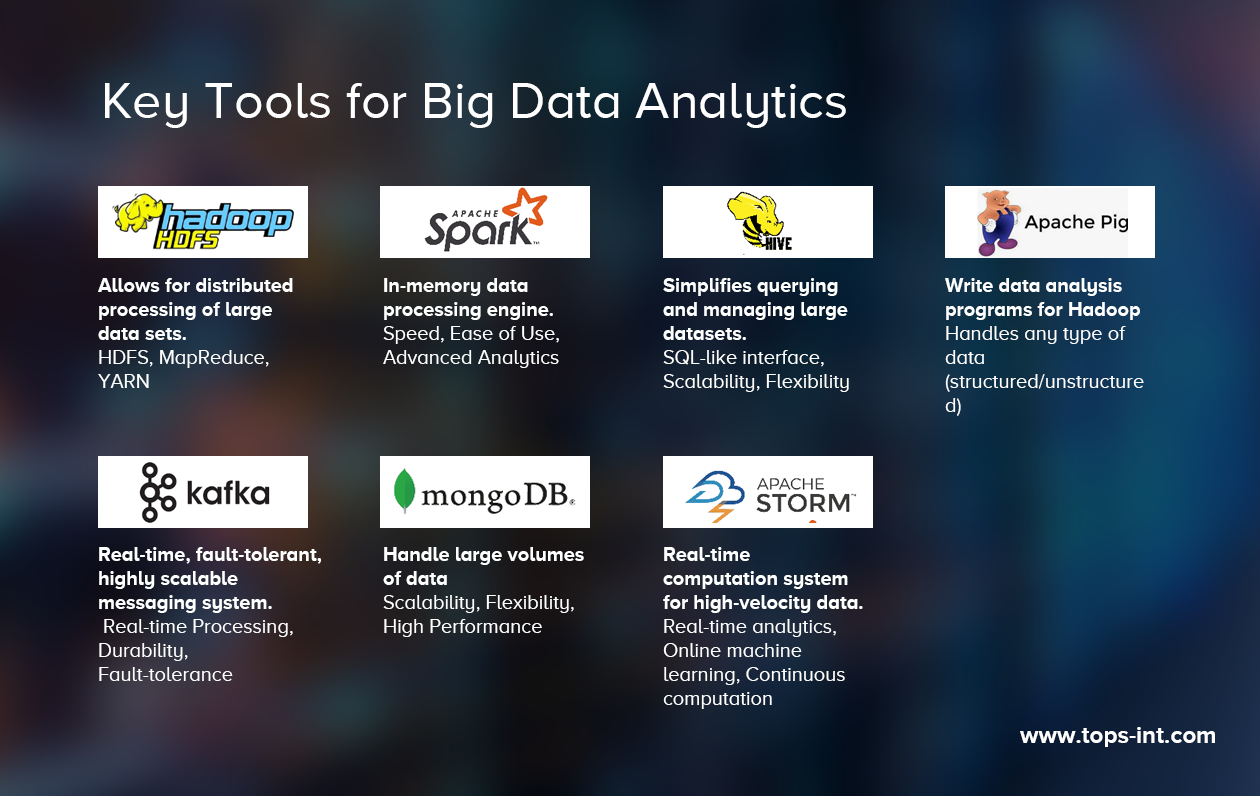
Step 1: Learn Big Data Tools
- Familiarise yourself with Hadoop, an open-source framework for processing and storing big data. Understand its core components like HDFS, MapReduce, and YARN.
- Explore Apache Spark, an in-memory big data processing engine. Understand its unique features and advantages over Hadoop.
- The official Hadoop and Spark documentation will be your go-to resource for this learning.
Step 2: Dive into Natural Language Processing (NLP)
- NLP, a subfield of AI, is concerned with the use of natural language in communication between machines and people. Topics to cover include tokenization, part-of-speech tagging, named entity recognition, and sentiment analysis.
- The Stanford NLP Group's resources are a valuable starting point.
Step 3: Understand Reinforcement Learning
- A kind of machine learning called reinforcement learning teaches an agent to decide by interacting with its surroundings. It forms the basis of many contemporary AI systems.
- The book "Reinforcement Learning: An Introduction" by Richard S. Sutton and Andrew G. Barto is a comprehensive resource.
Step 4: Master Time Series Analysis
- Time series analysis involves analyzing data points collected or recorded at regular time intervals. It's crucial in many fields, including finance, healthcare, and weather forecasting.
By the end of these two months, you'll have expanded your skills to include big data technologies and specialized areas in data science.
Month 9-10: Getting Hands-on with Real-world Data Science Projects
Step 1: Choose a Project
- Select a project that aligns with your interests and the skills you want to showcase. This could be anything from predicting stock prices, analysing social media sentiments, recommending products, or detecting credit card fraud.
Step 2: Collect and Clean Data
- Gathering relevant, high-quality data is crucial. Use web scraping, APIs, or public data repositories like Kaggle and UCI Machine Learning Repository.
Step 3: Perform Exploratory Data Analysis (EDA)
- Use visualisations and statistical tests to understand your data better. Identify patterns, correlations, and outliers. This step will guide your modelling process.
Step 4: Model and Evaluate
- Apply appropriate machine learning algorithms, adjust parameters, and validate your models. Remember, it's not always about choosing the most sophisticated model; the best model is the one that best serves your specific task.
Step 5: Interpret Results and Refine Your Model
- Extract insights from your model's results. What story does your data tell? Based on your interpretation, refine your model for better performance.
Step 6: Showcase Your Work
- Document your process and findings. Use platforms like GitHub to share your code and findings. This builds your portfolio and lets you contribute to the broader data science community.
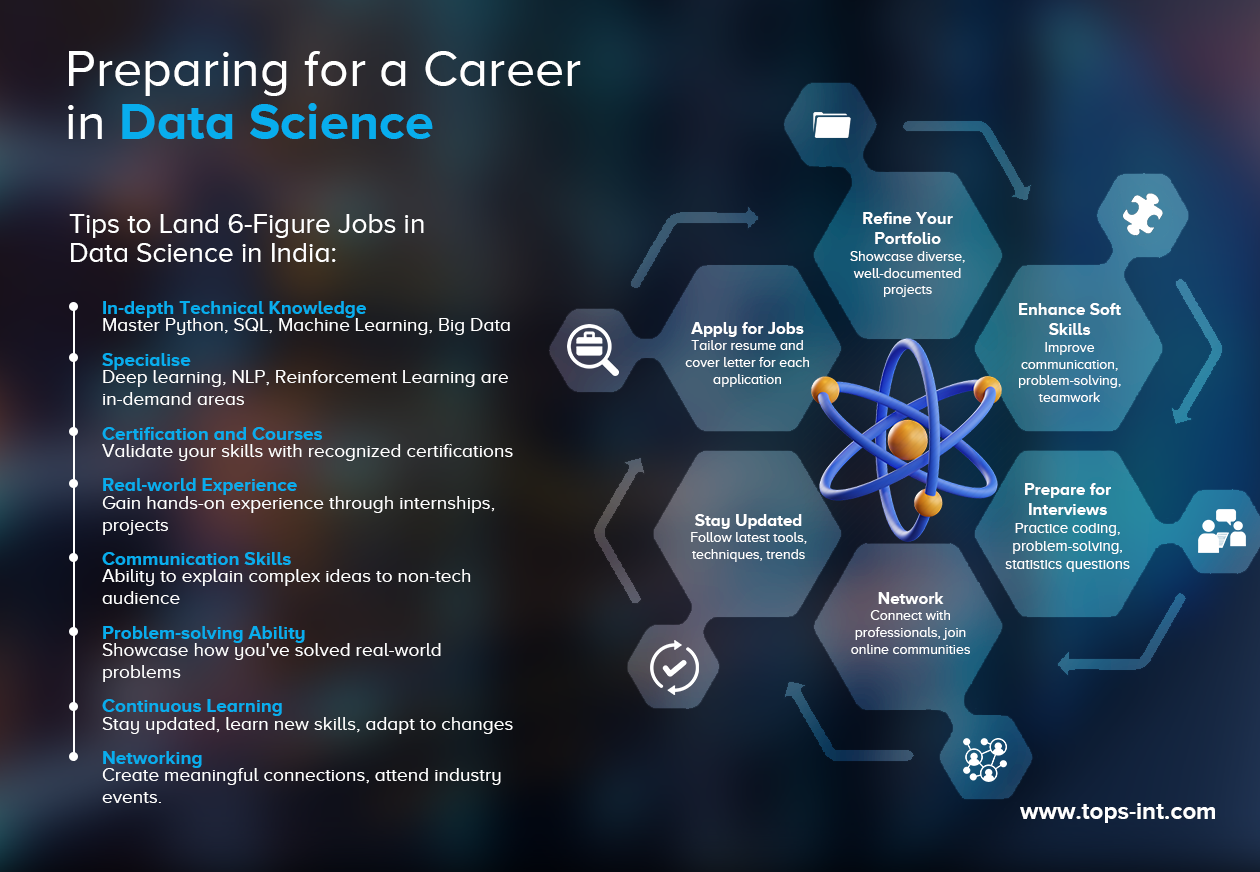
Preparing for a Career in Data Science